Title: 2026 Ontario Fire Code Update: What Homeowners & Investors Need to Know About Carbon Monoxide Safety
Date: January 7, 2026 Author: The Goldmark Group
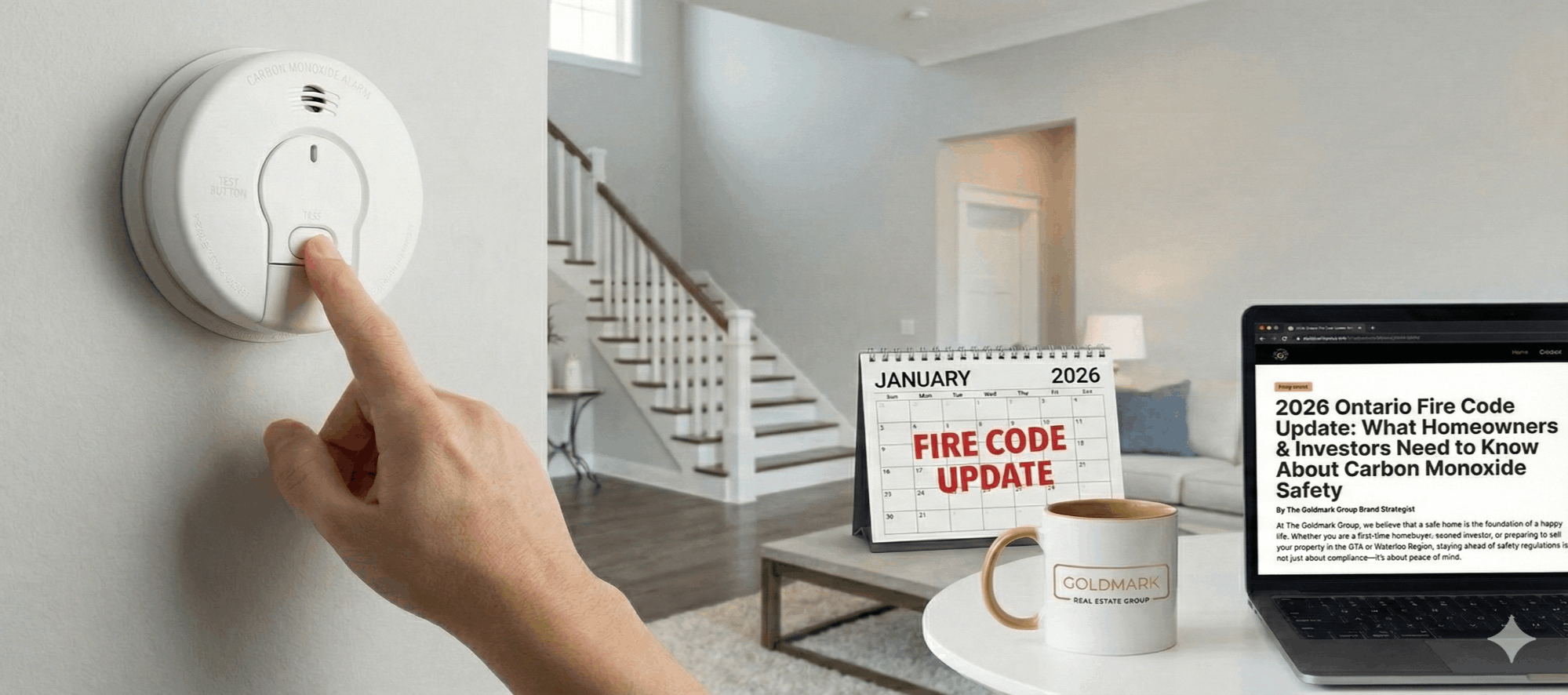
At The Goldmark Group, we believe that a safe home is the foundation of a happy life. Whether you are a first-time homebuyer, a seasoned investor, or preparing to sell your property in the GTA or Waterloo Region, staying ahead of safety regulations is not just about compliance—it’s about peace of mind.
Important changes are coming to the Ontario Fire Code (OFC) regarding mandatory carbon monoxide (CO) alarms, effective January 1, 2026. As your knowledgeable real estate partners, we want to ensure you have the clear, actionable strategies needed to keep your property safe and compliant.
The Big Change: "Every Storey" Coverage
Starting January 1, 2026, the updated Fire Code will require stricter placement of carbon monoxide alarms to reduce the risk of CO poisoning.
Previously, the focus was primarily on sleeping areas. The new update requires carbon monoxide alarms on each storey of a residential home that contains a fuel-burning appliance or an attached garage.
Does This Affect You?
If your home falls into one of the following categories, you will likely need to update your safety equipment:
-
You have fuel-burning appliances: This includes gas or wood furnaces, boilers, water heaters, ovens, dryers, and fireplaces.
-
You have an attached garage: Even if your home is otherwise electric, an attached garage presents a CO risk from vehicle exhaust.
-
Condo & Apartment Living: For multi-unit buildings, alarms will now be required in public corridors if the building uses fuel-burning heating equipment.
Note: Homes that are fully electric with no fuel-burning appliances and no attached garage are generally exempt from these specific CO alarm requirements.
Responsibilities for Landlords & Tenants
For our investor clients, knowing your role is critical:
-
Landlords: You are responsible for purchasing and installing the alarms, as well as providing tenants with instructions on how to use them.
-
Tenants: You are responsible for testing the units monthly and notifying the landlord immediately if a unit malfunctions.
Actionable Safety Checklist
To ensure your home is prepared for 2026, follow these steps:
-
Audit Your Alarms: Check if you have a CO alarm on every single storey, not just near the bedrooms.
-
Check Certifications: Ensure your new alarms carry recognized certifications such as CSA 6.19, ULC 218, or ETL.
-
Installation Tips: Mount alarms on ceilings or high on walls, away from corners and vents. They must be within 10 metres of sleeping areas.
-
Maintenance Routine: Test alarms monthly and replace batteries annually. Remember, the units themselves expire and typically need replacing every 5–10 years.
Why This Matters for Real Estate
Beyond the obvious safety benefits, keeping your home compliant with the latest Fire Code is essential when selling. A home that meets current safety standards signals to buyers that the property has been well-maintained and cared for.
At The Goldmark Group, we pride ourselves on providing data-driven insights and humble guidance to help you navigate these changes with confidence.
Source: Ontario Association of Fire Chiefs - Fire News Headlines
Ready to make your next move? Whether you are looking to buy, sell, or invest across Southern Ontario or globally, we are here to guide you with expertise and care.
Contact The Goldmark Group, brokered by eXp Realty today. Visit us at: www.thegoldmarkgroup.com
Recent Posts